Are You Using the ™ and ® Trademark Symbols Correctly?
THE GUIDE FOR CORRECT TRADEMARK SYMBOL USE FOR INDEPENDENT CREATORS & ENTREPRENEURS AND THE COST OF DOING IT WRONG
KEY INSIGHTS
• Using ® before your trademark is registered is a violation of federal law and subjects the user to liability for fraud and monetary penalties.
• The ™ and ® symbols communicate fundamentally different things to your market. The ™ symbol is the owner saying “I believe I have a protectable trademark and intend to enforce it.” The ® symbol is the federal government saying “We agree and will enforce your trademark too.”
• Research on purchasing behavior shows that businesses projecting a high degree of credibility will bring in the vast majority of sales. For independent creators and entrepreneurs, the ® symbol plays a huge role in this regard. Why? Because the ® symbol instantly and visibly communicates authority, legitimacy, and business credibility, while a business with no TM symbols blends into the background.
THE FREQUENT QUESTION
One of the most frequent questions I get as an attorney is also one of the most frequent mistakes I see made by independent creators and entrepreneurs—how, when, and whether they should be using the ™ and ® symbols to identify their business and brand. Often, the mistake stays hidden until something happens and the client suddenly realizes they might not be doing it right.
*A lot like the story of Coach A . . .
THE STORY OF COACH A
Coach A is a writer, community leader, and writing coach. Five years ago, she went out on her own and now has an established client base, a 4-month writing intensive she runs three times a year, and two mastermind retreats that started selling out around year three. However, over the last six months, Coach A has experienced a slight downturn in revenue, which she initially attributed to the current economy and some unavoidable turnover. That was until a community member started sending screenshots from a certain “Coach B,” whose social media feed looked a whole lot like Coach A’s website and content . . .
The next three hours went exactly the way you imagine. Coach A went all the way down the Coach B rabbit hole and back up—multiple times. As Coach A scrolled, took screenshots, and practiced some box-breathing, her first thought was: Who is this Coach B and why do her offers and content look so much like mine?
Her second thought was: Wait, did Coach B copy my entire playbook, change a few names, and steal my clients? Is this even legal?
Her third thought was: Hold up, now. How is Coach B using the ® trademark symbol for literally everything in her offer suite—everything I originally created—when she’s only been operating a few months?
Her fourth thought was: I need an attorney.
I love working with clients like Coach A. They are my people. Brilliant, completely real, wholly committed to their work, mission-oriented, infinitely creative, possibly ADHD.
If Coach A and I were having coffee right now, she’d tell me the whole back story—in full detail. Then we’d spend another 30 minutes dissecting Coach B’s feed, commiserating, planning Coach A’s full business comeback, and eventually, answering her core legal questions:
No, Coach B’s actions are not legal.
No, Coach B’s use of the ® symbol is not lawful.
No, Coach A has not lost her trademark rights.
No, it’s not too late for Coach A to pursue trademark registration.
Yes, Coach A needs to level-up her brand to protect her assets and stay in business ASAP.
As Coach B would soon learn, use of the ® symbol without a registered trademark is not only a violation of federal law—it’s fraud. And the penalties can be steep and career-ending even if the use is unintentional—and for good reason.
The ® symbol is a powerful marketing tool. It instantly signals business legitimacy and credibility and increases market visibility. So when someone receives all the benefits of the ® symbol without doing any of the work to earn those benefits—like Coach B—they are misappropriating those benefits directly from the creators who have done the work. Creators like Coach A.
This remains true despite the fact that Coach A had not yet filed a single trademark application and wasn’t using the “TM” symbol on anything (yet). Unlike Coach B, Coach A did the work, she earned benefits of the ® symbol. But until she files trademark applications and receives formal trademark registrations, Coach A is not authorized to use the ® symbol. However, she can use the “TM” symbol as her next best option.
WHAT ™ AND ® ACTUALLY MEAN
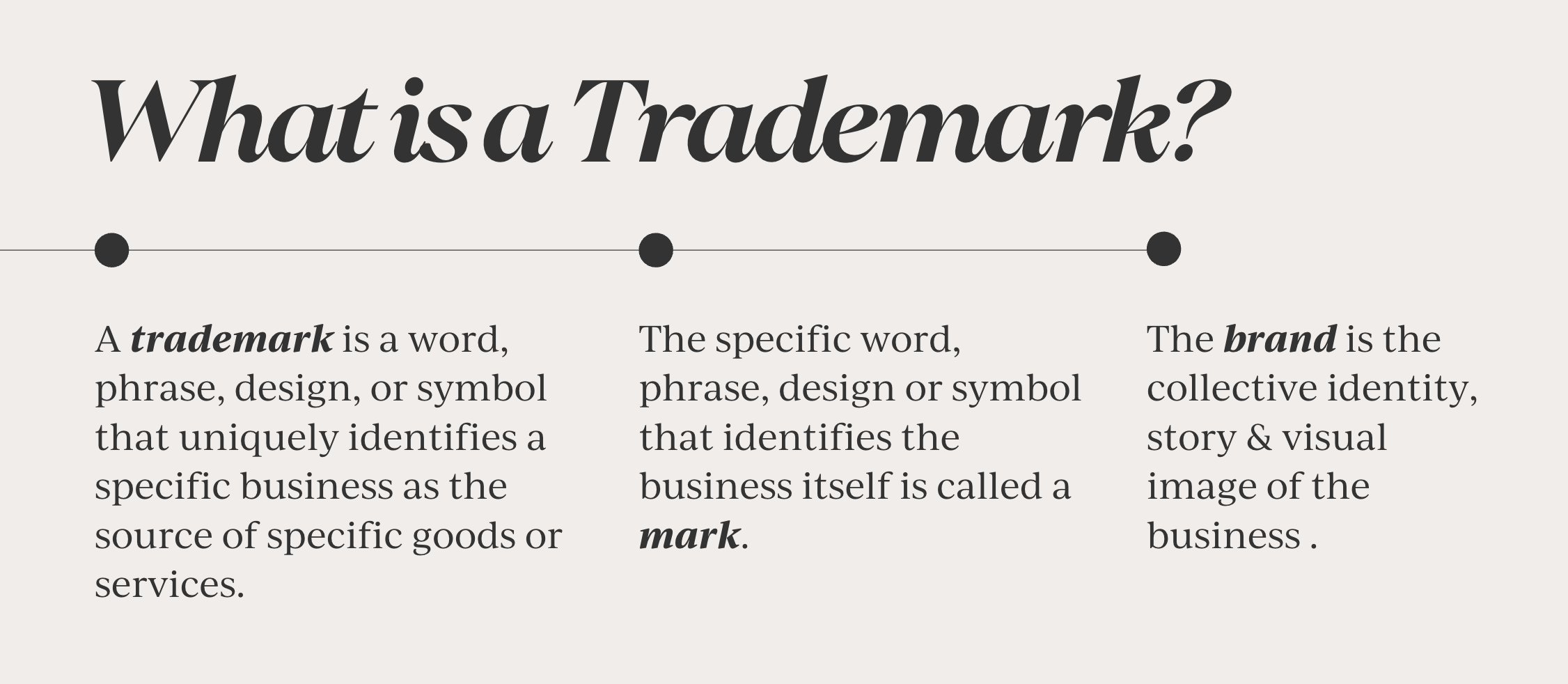
Let’s deal with the confusion first. The distinction between ™ and ® is one of the most commonly misunderstood elements of trademark law.
On the daily, I see creators using nothing when they could be using the “TM” and using the “TM” when they could be using the big “R.” In both scenarios, the creator is actively reducing the value of their brand and diminishing the visibility of their business. Without any trademark symbol, they come across in the market as less credible or established. They also leave their brand—one of their most valuable intellectual property assets—vulnerable to infringement.
And 99% of the time, it’s completely unintentional. Creators are just busy and far more focused on getting their work out than making sure it goes out with the correct symbols on. Otherwise, creators are simply uncertain about how and when to use the symbols, and they’re afraid of doing it wrong. This is the norm.
Less often, I see creators (like Coach B) using the ® symbol with no legal right to do so—resulting in misrepresentation, market manipulation, and unlawful inflation of business value. But regardless of type or intent, these common trademark symbol mistakes hurt real creators.
So I’m going to clear up the confusion with a simple breakdown of each symbol type and an easy-to-use symbol guide I made for my client.
THE “TM” SYMBOL
The ™ symbol next to a specific word, symbol, design, or phrase signifies the potential existence of a protectable mark. However, it does not mean any state or federal trademark agency will agree or that the user has consulted a qualified attorney to give them a thumbs up or thumbs down. It simply means the user believes they possess legitimate, enforceable rights under applicable trademark laws. So, it’s subjective.
Nevertheless, the “TM” symbol serves an important purpose in the creator economy. It clearly communicates the user’s trademark ownership claims, their intent to enforce those claims, and deters a multitude of potential infringement.
THE “R” SYMBOL
In the United States, the gold standard trademark symbol is the ® symbol, which signifies the existence of a registered mark obtained through federal trademark registration. The process begins by filing a trademark application with the USPTO and, if successful, results in the issuance of a formal Certificate of Registration. Then, and only then, is use of the ® symbol authorized.
The process takes an average of 9 months to 1.5 years, so anyone who prematurely swaps out the “TM” for “R” is guilty of fraud. In addition, formal registration is easy to verify with the USPTO, allowing fraudulent users like Coach B to be called out in seconds.
THE EASY TRADEMARK SYMBOL USE GUIDE FOR CREATORS
1. Don’t sit on your marks. You’ve spent years carefully building your business and cultivating your brand, but you will never capture the value of your efforts until you visibly claim, display, and protect your marks. Using the right trademark symbol serves all three objectives, and it starts with the “TM.”
2. If you have a trademark, use “TM.” Once you’ve established a distinctive, protectable mark in commerce, use the ™ symbol everywhere your mark appears. Be consistent across platforms, websites, emails, and other internal and external materials. If you have questions about whether your brand (name, logo, tagline, key offers, courses, programs, etc.) is a protectable trademark, please don’t guess. 🙏 😃 We’d rather answer that question for you over coffee here.*
3. Don’t sit on the “TM.” Why be content with the lessor “TM” when you can level-up your entire business with the “R”? Engage an attorney to handle your trademark registration application from start to finish, and work with someone who understands your industry, your business, and how your brand functions in the creator economy. Continue using the ™ symbol throughout the trademark application process until your mark is officially registered.
4. The “R” is a big deal, so make it a Big Deal. Once the USPTO registers your mark, frame the formal Certificate of Registration, hang it on the wall, throw a party, blast the news on all your socials, and be as obnoxious as you care to be. It’s a bigger deal than you realize. The level-up is real, visible, and quantifiable.
5. Upgrade everything and be consistent. Once you’ve adequately celebrated the level-up, replace the ™ symbol with the ® symbol and display it everywhere your mark appears—proudly, visibly, and consistently. If you have to spend money on new signage, website updates, or marketing materials, so be it. You will quickly make it up in sales, while the immediate and long-term elevation in visibility, credibility, and brand recognition will make you laugh for even thinking about those costs.
6. Enforce your marks. Monitor your marks in the market, be ready to address copycats and brand bots, and follow a clear method for enforcing your trademark rights. For info on how to do this, schedule here.
Why Is This Such a Big Deal for Creators?
I’ve represented entrepreneurs for over two decades, and the difference between clients with registered marks and unregistered marks is undeniable. For independent creators, writers, and entrepreneurs, trademark registration is one of the most powerful marketing tools available to them. And the cost investment is minimal compared to the way trademark registration advances creators in visibility, market authority, and credibility. And these advancements lead directly to sales. Here’s why.
The ™ may stop a potential customer in their scroll, but the ® is far more likely to convert them to a paying client.
In an industry where creative entrepreneurs are competing for attention, trust, and authority, a registered trademark communicates more to the potential customer than all the finely-tuned messaging, marketing strategies, and attention-getting reels ever will. For every purchasing decision your ideal customer makes, she will be faced with a myriad of options and messages. And because your customer is smart, media-literate, and busy, they’re far more likely to work with a business that:
Exudes legitimacy, authority, and credibility;
Demonstrates a strong industry presence with a mark that takes years to cultivate and formalize;
Stands behind its brand and visibly demonstrates its worth through trademark registration;
Clearly, accurately, and professionally displays its trademark status, with no sloppy marketing or inconsistent symbol use; and
Enforces its trademark as the highly-valuable asset it is.
Only the ® symbol holds the power to communicate all this in an instant.
And after serving clients as legal counsel for 20 years, I am not aware of any comparable marketing tool or strategy that has the power to elevate a business the way trademark registration does. The level-up is real—especially for creators who have been quietly cultivating their business for years and are ready to seen at a whole new level. If that’s you, then let’s go. The level-up starts with coffee ☕.
*For information on our standards for protecting the confidentiality of all clients, customers, and collaborators in our work and articles, see the InFrame Journal section of our FAQ page. To schedule a confidential call to discuss your specific questions or situation, click here to get on my calendar.